21 Days of VGM Days 1-3

Hello Fellow friends and Music fans.

Every once in awhile, it is good to get out and try something new. In this case, it’s a challenge.

This summer, I am trying the 21 days of VGM Challenge in order to get back in the habit of writing every day.

As posting takes some time and realistically, I do not have time to write a blog post every single day this month ( July tends to be a heavy performance month) AND finish my writing goal, I can and WILL make time to write something for this challenge every day. That being said, you can expect a post about once every 3 or so days with new pieces attached from now until the end of the challenge.

Additionally, The Challenge officially started July 1st. I have been writing by hand every day in keeping with the challenge’s intent to compose every day. However, realistically , I do not have enough time to input my ideas into the computer as well most days, except for the weekend so today (Sunday) is the first day I have audio available. Just to prove that I have not been cheating though, here is a selfie with my notebook.

I did the Thing!

If you want to know what this is about (and possibly join now or in the future) please follow the link for more information, but in short, I will be following writing prompts that are sent to my inbox in order to write these pieces.

Here are the First 3:

Composed 7/1/2019
Today, I just came up with an 8 bar Melodic Idea
Composed 7/2/2019
For Day 2, I took the Write Something in Minor Prompt and expanded on yesterday’s Melodic Idea
Composed 7/3/2019
Day 3’s chosen prompt was Compose in a Compound meter. I chose 5/8 but did a time displacement in the baseline as well. It is what I would envision would play while talking to a giant owl or Fantasy creature (Griffin, Chimera, etc) in a game.

Enjoy!

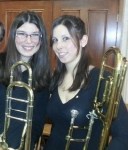
P.S. Speaking of trying new things , here is a picture of me Jamming, on stage, in front of strangers, and with people that I mostly don’t know for the first time ever. It was fun, just like I hope this challenge will be.

Image may contain: one or more people, people on stage and people playing musical instruments
Me with the Rogue Jammers, June 29th, 2019
Photo credit Robyn Barziza Chargo

Good News Everyone!

A few weeks ago I wrote a preview post of what I was currently working on and now have some news to accompany one of the projects.

In it, I mentioned that I was working on a film score that included 12 tone craziness among other things. Well, I’m proud to say that the film that Jason Schumacher and I have been working on the past few months was selected for the MnKino Film Score Fest.

This means that it will be screened with a LIVE ORCHESTRA playing the score simultaneously!! As a bonus: there is a theremin in the orchestra this year ( and yes I utilized it in the score)!!

The Event takes place at the Science Museum in St Paul MN on July 20th at 7:00 PM.

A link to the Facebook event page can be found here where you can reserve tickets. But, you’d better act fast because I’m told they go quickly.

Additionally, there is a pre-screening at 4:30 of the films that did not quite make the cut for the live orchestra to play. They are the product of months of hard work by talented collaborating artists of differing disciplines and deserving of viewing as well.

If you can’t make it because MN is a bit too far away, or have another reason (i.e. work and family obligations, or you couldn’t get tickets) I have even better news for you.

This event is live Streamed!!! Please make sure that you follow the Facebook page and click the “interested” button in order to get reminded of the event and receive a link to view it.

Additionally, if you got the Futurama reference in this post, we can be friends.

Hope to see you there!

Music in the Wind

Hello Fellow Music fans and friends,

This is a short blog post where I wanted to share an experience from a few days ago.

Did you know that if you take the time to listen, you can sometimes hear music in the space around you?

A few days ago, I had the pleasure of visiting the Minneapolis Sculpture garden (the one with the famous cherry spoon and now blue cock) for the first time.

A typical touristy pose commemorating my first visit here. No trip is complete without it!

There, among one of the most eclectic collections of sculptures I have ever seen, they have an air sculpture in the trees comprised of dozens of wind chimes. The tones on the chimes were chosen from a John Cage chance music piece titled Dream (1948).

Standing a good distance away from the tree, it sounds like you might expect a typical cacophony of chimes to sound. When we arrived beneath the tree though, I could not help but notice a few low and mid range frequencies that appeared and produced a soothing yet eerie vibration. As these tones shuffled between each other, I could not help but feel the music that was being produced by only the wind and these suspended pieces of metal vibrating in my bones. The sound was beautiful. and not unlike Tibetan singing bowls in tone color. It was as if there were an invisible ensemble perhaps of faeries, improvising, creating this piece just for those patient enough to listen.

Though my phone did not do justice in capturing all of the colors, here is a video of the phenomenon to give you an idea.

A few minutes later, my friends and I took the opportunity to lay in the grass near the giant swing sculpture as it was a gorgeous day. It was there that I experienced a miniature symphony in the air. As the clock struck 6, the bells from multiple churches began to ring one by one and add melody to the gentle accompaniment created by the invisible faerie band in the wind-chime laden tree behind me.

Here is the video of this experience (and yes I shushed my very verbose S.O. so I could capture this magical moment of air music- ha!).

Though you may or may not not agree with me calling this music, I hope that you enjoy these sounds. Perhaps they will inspire you to create your own music in some way.

How to Plan a Compositon recital….and avoid the stress that can come along with it

As just about  any music major can attest to, planning a  recital is a lot of work. As a Composition Major at YSU, I have had the required opportunity to plan two of them (so far) in my academic career. Recitals in general will always require some type of assessment usually known as a jury/ hearing, that must be played in front of a committee as  a preview of the recital before permission is granted to go ahead and plan the main event. The experience can be nerve racking for any musician. However, the Composition recital is unique in that, not only does the student composer have to make sure that the scores are pristine when  presenting them to the jury committee; They must rely on others to play their music at an acceptable level and coordinate the musicians by themselves. In short, when in this position, you not only compose the music but you become a  concert manager, secretary, and presenter and advocate for your own music. Depending on the nature of the pieces, you as the composer may also become a performer of your own work as well.

Step 1: Start Early

What I mean by this is do not procrastinate when planning. As I’ve stated before it is a lot more work than it may seem at first. Get the deadline dates of latest possible jury and recital dates and the number of days that you have to submit program info between the end of the hearing and recital and WRITE THEM DOWN IN A CENTRAL LOCATION that you can refer to. Don’t forget to get names of people that you may need to submit this information to as well. I advise getting a binder to keep all materials such as jury paperwork that may need to be signed at the hearing by the jury, dates, and eventual schedules. If you can, get this information the semester before your anticipated recital date.

Step 2: Read all paperwork for requirements and begin selecting potential pieces

Keep in mind how long the program needs to be and how long each piece you have in mind is.

Step 3: Begin selecting players

I advise to write down all instruments that will be required in each piece in a list format. For example:
Bastet’s Lullaby:

1Harp

1Piano/ Tambourine (I put these together  as one person who could play both)

1Voice

Then begin by listing potential  musician friends that would work together well on your piece.If you can, try to keep it limited to as few actual personnel as possible. (in this last experience, I had the situation where, due to musicians’ busy schedules and realizing that it would be unfair to ask any one person to learn more than two of my pieces along with their other degree requirements, there were 23 people involved in my senior recital and it was a nightmare to plan). Keep this in mind when selecting pieces.

Step 3: Contact the potentials

If they say no, do not hound them. This is one of the fastest ways to annoy and loose the respect of the musicians who very well may be the ones who could recommend or hire you in the future. Remember, they are busy people too. Please allow at least a month before the hearing to give them ample time to learn your music.

Tip: if you have ensemble pieces with standard instrumentation, ask the ensembles that are already set up first as they probably already have set rehearsal schedules. This worked very well for Matt’s Music (a brass quintet).Also, it helps if the musician has played your piece before.

Step 4: Get Everyone’s schedules

….and keep them on file with the ensembles for your pieces that they are in. This comes in handy when scheduling rehearsals. It is likely that you will have to organize them and keep them in communication with each other so that rehearsals happen. Also, don’t be surprised if it is you who has to  reserve the room they are to rehearse in. After all, they are doing you a favor.

Step 5: Select potential dates for the hearing and Recital

Doodle polls work great for this. I had 5 dates and multiple potential times picked for each and had everyone involved fill out when they would be able to make it and went from there. The potential times and dates were picked out of the results of examining all schedules for free times. However, how you do this is up to you but always double check with everyone involved before scheduling anything.

Step 6 Find Venues and select a Jury

After you have your potential Hearingdate figured out, find an acceptable committee and ask them which out of these times they can make. Then, reserve the space well ahead of time so there is no last minute fumbling for a location. Do this for your Recital location as well (not forgetting to allow at least an hour of time before and after the concert to allow for setup and the reception/tear down). I advise allowing at least 3 weeks between the Jury and Recital date in case something happens at the jury where you have to do something over again in order to pass.

Step 7 Contact all players again

Let them know these dates times and places and KEEP REMINDING THEM. Do this for your jury committee as well. If you wish to have it recorded professionally, you will need to contact these people too.

Step 8 Print our all scores- at least 1 copy of each for the jury committee members.

It also looks better if you have a set plan and put the scores in the order in which they will be heard.

If you can, keep extra parts on hand as well as you just never know when music can get lost before a performance. Assuming that you pass (which you probably will if you took the time to get all ducks in a row), the fun part begins.

Step 9- plan the program and submit information

Keep in mind length of pieces and what feels natural to a concert flow. It helps for stage setup and tear down if you can put pieces together that have the same players or stand set up. Also, decide if you want an intermission and where to put this.

Pleas from a brass player: If your recital is particularly long and there is no intermission where a brass player can warm up. PLEASE avoid having us play toward the end, as the chops don’t always respond at their best when sitting for long periods and there is no guarantee that your piece will not be effected by this fact. Though warm up time is also helpful to woodwind players, they have the advantage of silently soaking the reed in their mouth where as we can’t warm up much more quietly than making fart noises through our mouthpieces.-end rant

Step 10: Advertise

Make recital posters with all information- Date, time, venue,and if you plan on having a reception (free food draws crowds). Post them all over the music building and anywhere else that is appropriate. If you want a bigger crowd, ask friends to advertise and hand out posters as well.

Making a Facebook event page and inviting anyone you can think of is a great way to get the word out as well. After all, the people who have seen you progress will want to know so they can come out and support you.

 Step 11: Have the recital

Congratulations! You have made it to the ultimate prize.

If you are comfortable talking about your pieces, great. If not, program notes are a big help. A friend can take on the MC duties as well if you prefer.

On recital day, make sure that there are enough stands for your players and that the programs have been picked up. Arrive early and bring your extra parts. prepare for the worst, and expect the best.


Final Advice: While all of this planning is going on, try to find time to thank the musicians for working on the music and encourage them. Also, if questions come up from them, mark them in your scores and make sure they are corrected before the hearing. Don’t forget to have fun, be flexible and keep a sense of humor during this process. Refer to Step 1 to keep stress minimal. Happy planning and Composing!


What’s New in the life of Sam?

Well, lots of things as a matter of fact. First of all, I applied to be accepted to a 12 day Summer Composition intensive in Indiana and….I GOT ACCEPTED!!! This is an awesome opportunity as I will get to study with professional composers such as Zae Munn, Michael Schelle, Kristin Kuster,  Jay Batzner,  and Joshua Marquez, meet and network with other young composers who have similar musical goals in mind, and learn some new techniques to broaden my horizons. I will also be working my tail off in the near future to save for this learning experience (though I will also be gratefully accepting donations so that I can justifiably afford to eat).

Secondly,I’ve recently heard back From Avguste Antonov concerning the upcoming CD with Cumulus Humilis on it and that is nearing it’s final stages. As a contributing composer to his Debut album, I am both honored and excited.

Thirdly, for your playing Pleasure (or agony), several new Scribbles and Doodles have been released. Please feel free to investigate these and if you wish to perform any of them, they are free of charge, though it would be appreciated if you would send a copy of any programs.If your instrument is not there, do not worry. It will likely make it on there in the near future. Also, any recommendations or requests for a new scribble are always welcome.

Fourthly, I wrote a new Band Piece! This one is very different from most other works I’ve produced as of yet due to its placid simplicity. It is called Reverence and was composed with a young or small band in mind. The profound Fraggle Rock quote from Cantus the Bard ” There is Movement in the stillness just as there is Music in the silence.” was the main inspiration for the mood of this piece (as well as the 2 night long bout of insomnia and boredom from not sleeping). I tried to Follow Steven Bryant’s advice that he gave to me during a very fortunate meeting at Midwest last December, which was to build off of a simple motive rather than be programmatic, and kept the lessons that were learned talking to music educators teachers about needs in repertoire and what would help their students in mind. Hopefully, I’ve succeeded…or at least come close.

Fifthly, life has been a whirlwind of musical performance meeting real life lately. A midst preparing to move out into an apartment this summer and searching for a new job (as sadly I must leave my library campus job when I graduate), life has had an interesting way of creating musical opportunities that present themselves to keep one busy. Since February, I’ve been singing with  the Youngstown Trinity United Methodist Church  on a regular basis (my first full time church choir gig since 2008), performing in several concerts (Trombone day,  The C.P.E. Bach premiere,  multiple recitals and others) writing essays, and working on Scribbles and Doodles to keep myself composing on a regular basis. Any spare time has been spent organizing, practicing and rehearsing groups for an upcoming recital.

Speaking of which, the planning for the Sr. Composition recital is well underway. This will take place April 25th  5pm at Trinity United Methodist Church in Youngstown. thanks to 23 willing Victims  musicians who graciously volunteered to play my music. Stay Tuned for an update on the program.


Highlights from the Last Month

So, it’s been awhile since I have had time to post anything on here. 1 month in Internet time is equivalent to “like forever” in real world time as we all know. In order to make up for that time, I will attempt to explain the highlights  in a nutshell:

1) Cumulus Humilis was performed 3 times by Avguste Antonov the week of the New Music concerts at the end October. In that time, he was approached by Hartshorn record company in NY to record a cd of New piano works. To make a long story short (too late) he chose my piece to record on the Cd and I am still ecstatic!!!

2)New Pieces have been written- As an added unexpected feather in my cap, I was asked to write music for the upcoming Worlds Quest browser game. This was my first official video game related project and I am elated to say that my first attempt was a success .To sum things up, they liked it-a lot and I am grateful. The game will be released  on December 20th.

Also, I have been working on a new experiment at the request of Scott. I will be writing a blog post about it shortly. Other plans include creating a  collection of one page solos for  from all of the 8 bar excerpts that were composed for Instrumentation class this semester. I am debating calling the collection Doodles and Scribbles or something to that effect.

Desiree Carrion and I after Carols and Cocoa 2013

3) I played my last Carols and Coccoa concert of my undergrad. This was a surreal experience as it is hard to believe that the time has flown that quickly. Kudos to my friend (and soon to be SAI sister) Desiree Carrion for having her first arrangement for Trombone ensemble performed. God Rest Ye Marry Trombonists was a ball to perform for a last hurrah ,and I especially cracked up singing the Lyrics “to save us all from Schoenberg’s Music when we’ve gone astray”. For a three hour plus long annual concert that we all complain about, I’m sure going to miss performing in it-sort of.

4) In November, I helped premier  a piece for Trombone quartet by fellow composer Richard Zacharias called Pardon My Slide with my friends Mariah Bailey, Bo Violette and Andrew Stamp. I also had the honor of Performing The Dance of Spring for Yanda Zhu’s Graduate Composition Recital. If you haven’t heard of him, you probably will soon.

My Top 10 Composers

*Disclaimer: This list tends to fluctuate on an almost a weekly basis as there are numerous composers that I admire and respect. The composers that have made this current list are the ones that end up on this list most often when someone asks me this question and are in no particular order of ranking .  When you reach the bottom, I encourage you to comment on some of your favorite composers and add to the discussion. That being said, lets get on with it.

#10: Gustav Holst

Who are they: An English composer responsible for the first original concert band piece  (Suite in Eb)and composer of The Planets among other fantastic works.

Why is he/she a favorite: He wrote some of the first band music, my favorite large scale orchestral piece (The Planets) and was also a trombone player. His story of how hard he worked in his lifetime by teaching himself to compose, deal with  having a weak constitution, and teaching many, I find inspiring. Also,I love his sense of melody and use of folk tunes in his works.

#9 Joe Hisaishi

Who are they: The composer behind much of the wonderful music in Hayao Miyazaki’s films. For Example: My Neighbor Totoro, Spirited Away, Howls Moving Castle, and Princess Mononoke.

Why is he/she a favorite: Many of his melodies are breathtakingly beautiful. I was first exposed to his music when watching anime such as My Neighbor Totoro, Spirited away, and Howls Moving Castle. When I saw him playing the piano AND conducting his own pieces simultaneously thanks to you tube, he instantly became one of my favorite living composers. He not only writes notes, but knows how to make music as well.

#8 Igor Stravinsky

Who are they: The composer responsible for the alleged May 29th, 1913 riot. It was all his fault for composing The Rite of Spring.

Why is he/she a favorite: I am a sucker for rhythm and rhythmic gestures. That being said, Stravinsky’s music captures my attention in a way that most music evades. I can also appreciate how he as a composer evolved from his early Firebird Suite days and developed a distinct voice that is heard in his ballets Petrushka and The Rite of Spring and in  Histoire du soldat . Incidentally, he was also one of Frank Zappa’s favorites as well.

#7 Koji Kondo/ Junko Tamiya/Hirokazu Tanaka

Who are they: Composers behind the music for various Nintendo and Capcom Titles. To name a few: Mario Bros., The Legend of Zelda (Kondo), Bionic Commando, Little Nemo, The Dream Master (Tamiya), Metroid and Super Mario Land (Tanaka).

Why is he/she a favorite:  Having grown up in the era of the Nintendo Entertainment System, I was exposed to the 8 bit music of these games on a regular basis . Composers for these games had to be extra creative because they had a much more limited sound palate and range  to work with and had to create music that looped indefinitely. Although the  midi “instruments” sounded like beeps and boops (which probably helped earn  its passe reputation with more “serious” music critics) some of these melodies are surprisingly harmonically complex.  Kondo and Tamiya and Tanaka   are grouped together because it was their music that I was first inspired to pluck out on the piano  Many of my earlier compositions (and some recent) echo their influence.

#6 John Mackey

Who are they: Self made composer known for writing lively pieces with lots of percussion and ostinatos.

Why is he/she a favorite:  Did I mention I love Rhythm?  Also, his blog is a bowl of fun to read and he has an adorable cat. Musically speaking, I remember playing “Strange Humors” for the first time in All College Band and thinking “Woah!,  You can use Djembe in a band piece? And, I’m really allowed to gliss on my trombone? So this is what modern  band music sounds like.” Besides the fact that I enjoy his compositions, I admire him for the fact that he has literally made composing music his day job and does both the creative and business sides of music himself.

#5 Claude Debussy

Who are they: French composer labeled as an impressionist, although he probably would have disagreed with that label, according to a music history professor of mine. he Wrote the infamous Clair De Lune and  Prélude à l’après-midi d’un faune.

Why is he/she a favorite:Because he dared to be different and not follow the conventions of Western music that he grew up with and still made beautiful music. The colors and scales he uses in his music are what draw me to it.

#4 Frank Zappa

Who are they:Composer known for his sensational stage antics, complex rock, Jazz, Classical and everything in between, and knowing everybody.

Why is he/she a favorite: Yes, I know that many people look at Frank Zappa the person and are instantly turned off by the absurdities or look at some of the vulgarities in his lyric content and are too disgusted to consider listening to the music. Just as many are probably intrigued. Personally, I try to ignore this when applicable and try to focus on the music only. That being said, he was very eclectic and resourceful, drawing on several influences, sound palates and styles. This is  a strategy I try to emulate with my own music but in my own way. Many are also unaware that he wrote classical music as well. The  style transitions in his music are also genius.Fun fact: Although he is no doubt eccentric, he did not support drug use and was relatively clean, aside from liking his Smoke and drink.

#3 George Gershwin

Who are they: A composer who successfully fused American Jazz, Tin Pan Alley and Classical and is known for Rhapsody in Blue, Porgy and Bess and An American in Paris.

Why is he/she a favorite: This man’s music is Fun to listen to. I’ve Got Rhythm, Swanee, and the tune from Rhapsody in Blue all got stuck in my head at one time or another and, unlike most ear worms, I was OK with it. Also, although I did not list any more jazz composers on this particular list, Jazz  is a genre that I enjoy listening to and it is interesting to hear the obvious influence in his music.

#2 Ralph Vaughn Williams

Who are they: An English composer who was a friend to Gustav Holst and wrote some gorgeous orchestral music in my humble opinion.

Why is he/she a favorite:  Three words: The Lark Ascending.

#1 Me…….Just Kidding

The actual # 1 is Bela Bartok

Who are they:Hungarian Composer who gathered Folk melodies, wrote pieces for students and professionals alike.

Why is he/she a favorite: As an avid lover of Folk influence in music, he is a composer up my ally. Plus, in theory classes, I sincerely enjoyed analyzing his music. It was fun to see how much thought was put into his music and it still sounds musical to me. Unlike many other pieces that I have studied, his have always been like putting a rewarding  jigsaw puzzle together. After doing the academic work to find the visual pattern on the page, the resulting sound “picture” was not torture to the ear, even with the amount of sophistication in the pieces studied. Also as a teacher, he knew how to write music that was geared towards teaching students that was also not corny (like many tunes in student level books) to listen to when playing through it. On top of that, his last name is just plain cool;cool enough for the white bat in Anastasia to share the same name.

Help to get your Creative Juices Flowing Again (composition edition)

Anyone who has done  a large amount of composing knows that  from time to time,  a creative rut can occur. But have hope. These mental blocks can’t last forever and there is help out there. Here is  a list of ideas to help with getting rid of writers block that I’ve learned over the years from others as well as from personal experience.

1) Pick an instrument and give yourself a time limit to compose (I usually do 45 minutes to an hour). After the time is up, do not touch the piece for the rest of the day. Repeat several days in a row with a new piece each time.

The best thing about this exercise is that, though whatever comes out of the session may not be a masterpiece, it gets you in the habit of writing every day and may even help you develop a more efficient way of writing down ideas and coming up with them quicker. Also you can always take fragments of these bits later and use them in a larger work. Many thanks goes to fellow composer Dan Brandt for showing me this exercise.

2) Read a book and envision a movie score.

This works best with Fiction Novels. As an example, Of Wizards and Dragons is inspired by events of the first book in The Enchanted Forest Chronicles.

3) Get a list of random subjects and pick them out of a hat.

Whatever you pick is the subject for your next work. (similarly, you can do this by putting instruments into a hat and repeating the same process) Here is a list to help you get started.

4)Step away from the Music and give your mind a break.
Sometimes doing something non-musical like taking a walk or attending a scientific lecture  can inspire in unexpected ways. When I studied with Dr. Gwen Rollin, she recounted how her former  composition teacher, Iannis Xenakis, once required his students to drive a long way to a lecture about celestial bodies. His justification : inspiration for a piece can come from any source and educating the mind is always beneficial.

5)Ask a musician friend for an assignment

…or what it is they want to hear for their instrument and write it for them. Bonus: There is a greater chance that your piece will be performed.

6)Pick 3 instruments/ styles that you have not written for yet and write a trio.

You can also apply this exercise to time signatures and voices you have not used yet in a piece.

7) Reverse your Process

If you are used to writing the melody first and then the accompaniment, try writing the accompaniment first next time. Or, vice-verse.

8)Pick 5 notes at random

This is your melody. You can further challenge yourself by allowing these to be the only pitches allowed in the piece.

9) Mirror Image

At a keyboard,  pick two pitches, preferably at least an octave apart. When one pitch goes up a third, the other pitch goes down a third for example. Try playing with various combinations. I have “accidentally” come up with germ  melodies and harmonies this way.

10) Close your eyes and don’t look at what you play.

Let your musical ear and creative heart be the only things that guide you. Don’t forget to record yourself in the process.

Most importantly, remember to Always Be Open, as anything may prove to be an inspiration for a piece.

If my fellow composers have any other suggestions to add to this list, please leave them in the comments below. And as always, Happy Composing!

Matt’s Music

I know this is old news but it is also good news. Back in early February 2013, my mom approached me over the phone and asked me to write a brass piece for students to play for the 50th Anniversary Celebration of Matt’s Music Store in Tonawanda NY. Gladly I obliged not knowing what I was getting into. For this piece, I got to practice writing music for a student level ensemble for the first time. This is something that I hope to do many more times in the future and this was a great opportunity to do so.

While I was beginning to construct the piece, it was requested that the piece be fun, attention getting, and that it include some of the music that students studying their instruments would be practicing and subsequently, the staff at the store would hear on a constant basis during student’s lessons. I then came up with the Idea of beginning with a Fanfare that made use of common chord structures and melodies like Do a dear. I then decided to make the piece go into a Polka that includes the infamous “Hot Cross Buns” because Mr. Matt is an avid accordion player who has appeared on the Lawrence Welk show. The piece then evolved into an eclectic style medley of swing (referencing the fact that the Store has a Jazz band) pop songs quotes that you may hear through the walls,and other typical lesson book songs.

All though composing this I had to keep the ability level of the players in mind and there were some things that initially did not work because of this. However, it was the process of changing things to make them more idiomatic for the students where I learned the most from this piece (thank you Mom for the guidance). Even though I was not able to be there for the premiere, I am told that the students had fun playing it and that Mr. Matt and the Audience enjoyed it. Also, it helps that those kids did a fantastic job, and my mom did great coaching the quintet, Without them, this would not have happened. All in all, it was a very rewarding experience that I am proud of and I had a BLAST doing it.

P.S. if you read this whole post and watched the video, you are AWESOME! Also, remember, Feedback is always welcome and much appreciated.